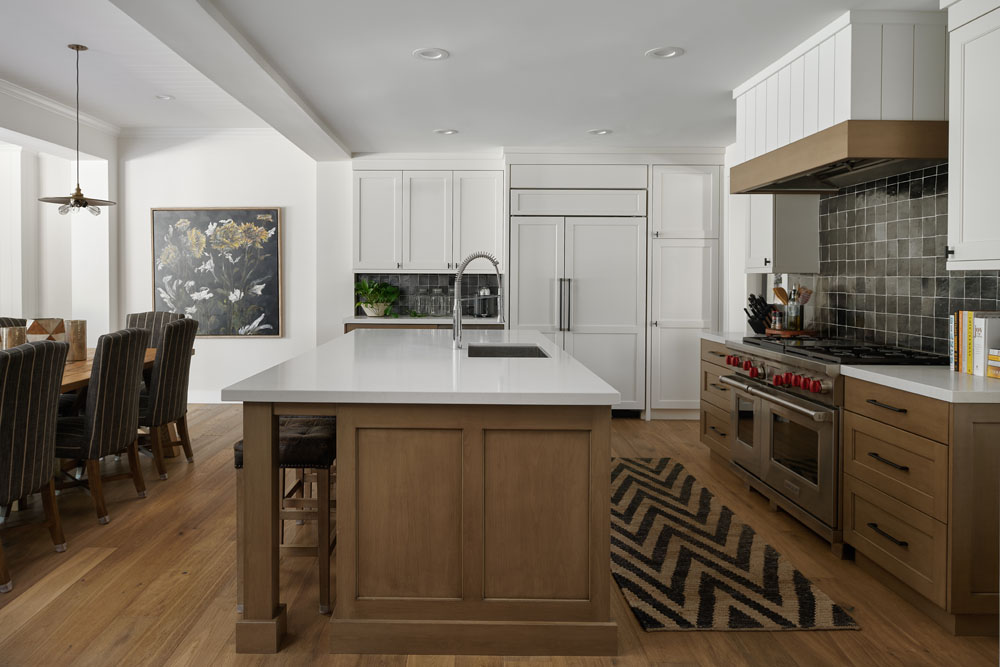

When most people hear “accessible bathroom,” their mind jumps to stainless steel rails bolted to white tile walls, rubber mats on the floor, and a general atmosphere that feels more clinical than comfortable. It is an image rooted in decades of institutional design, and it is completely outdated.
The reality is that universal design and luxury have converged. Curbless showers, once considered a purely functional accommodation, now appear in the pages of every major design publication as a must-have feature for high-end bathrooms. Grab bars come in matte black, brushed brass, and oil-rubbed bronze, shaped to look indistinguishable from the towel hardware hanging next to them. Slip-resistant flooring looks like the honed marble and textured porcelain you would choose even if safety were not a consideration at all.
In Scottsdale, where nearly one in four residents is 65 or older and the luxury housing market continues to grow, the demand for bathrooms that are both beautiful and barrier-free is not a niche concern. It is the direction the entire industry is heading. The NKBA’s 2026 Bath Trends Report found that the vast majority of design professionals now consider aging-in-place features either mainstream or approaching mainstream adoption.
Whether you are planning ahead for yourself, remodeling a home for aging parents, or simply doing a whole-home renovation and want a bathroom that will serve you well for decades, there is no reason to compromise on aesthetics. Here is how the best accessible bathrooms get it right.
Curbless Showers and Zero-Threshold Entries
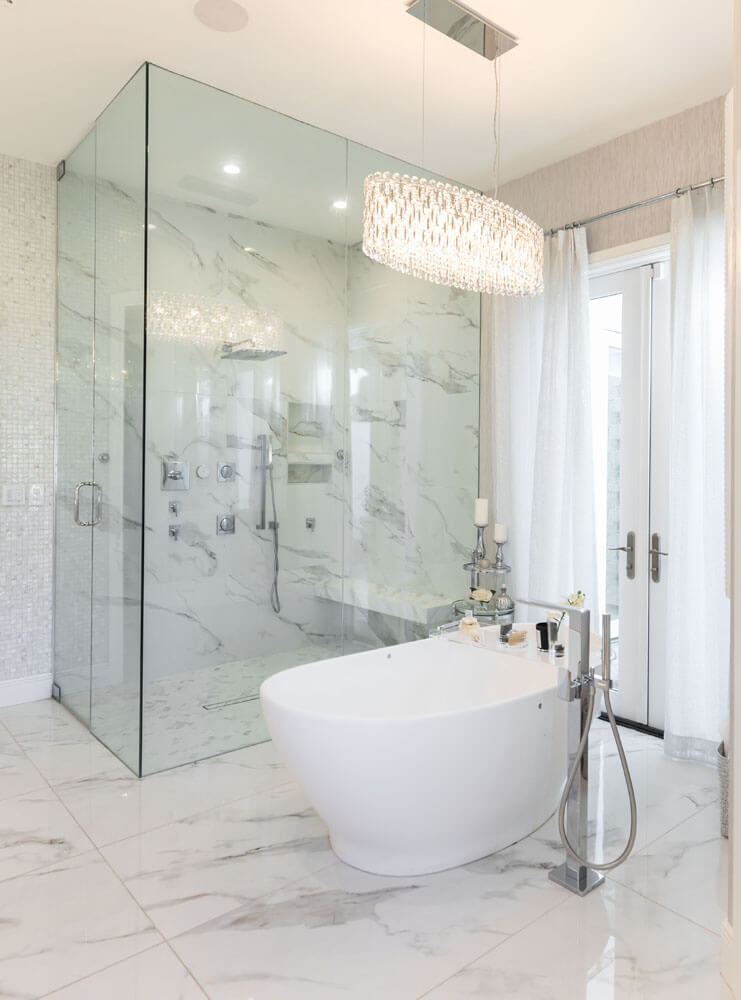
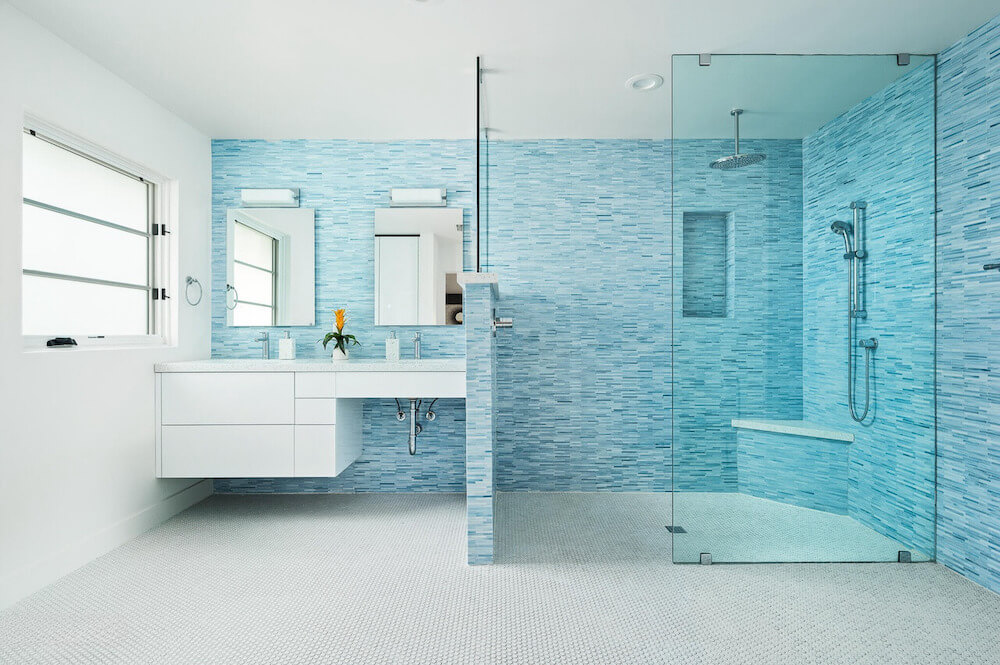
The zero-threshold shower may be the clearest example of accessible design becoming a luxury standard on its own merits. By eliminating the curb entirely, the shower opens up visually, makes the bathroom feel larger, and creates a seamless flow of flooring from one end of the room to the other. The fact that it also removes a tripping hazard and allows wheelchair or walker access is almost secondary to the design appeal.
The technology that makes this possible has matured considerably. Linear drains collect water along a single channel at the shower’s edge rather than pulling it toward a center point. This allows the floor to slope in one direction at a gentle quarter-inch per foot, which means you can use large-format tile or even natural stone slabs instead of the small mosaics that traditional center drains require. Brands like Infinity Drain offer tile-insert grate frames that make the drain nearly invisible, while Schluter’s KERDI-LINE system integrates directly with their industry-leading waterproofing membrane.
The design possibilities expand from there. Frameless glass enclosures maintain the open feel. Built-in tiled benches provide seating that reads as a spa feature rather than an accommodation. Recessed niches offer storage without interrupting clean wall lines. For walk-in shower layouts specifically, including how they compare to freestanding tub options for your primary bathroom, our upcoming guide to walk-in showers versus freestanding tubs will cover the decision in detail.
Integrated Grab Bars and Support Features
This is where the biggest perception gap exists, and where the industry has made the most dramatic progress. The grab bars available today look nothing like the bars you picture in a hospital bathroom.
Manufacturers now produce grab bars that double as towel bars, shelf supports, and toilet paper holders. They come in every finish you would find on high-end faucets and showerheads, including brushed nickel, matte black, polished brass, and oil-rubbed bronze. HealthCraft’s Invisia Collection, for example, offers a towel bar rated for over 500 pounds that won a Red Dot Design Award for its styling. Kohler coordinates grab bars with their Purist and Artifacts faucet lines so the hardware throughout your bathroom shares a single, cohesive aesthetic. Moen’s Home Care line pairs grab bars with integrated towel bars and storage shelves at accessible price points.
The professional approach to grab bar placement is worth noting. A skilled design team will match grab bar finishes to every other piece of hardware in the room so that the safety features blend into the overall design language rather than standing apart from it. And even if you do not plan to install grab bars immediately, having your contractor install blocking (structural reinforcement behind the drywall) during construction means you can add bars later without tearing open walls. It is a small investment now that preserves enormous flexibility down the road.
Built-in shower benches serve a similar dual purpose. A teak or tiled bench reads as a spa-quality feature while providing a secure place to sit. Paired with a handheld showerhead on a slide bar, it creates a bathing experience that is both safer and more comfortable for everyone who uses it.
Comfort-Height Vanities and Ergonomic Layouts
Thoughtful layout adjustments improve the daily experience for every member of the household, not only those with mobility considerations. That is the core principle of universal design: what works better for someone with limited range of motion almost always works better for everyone.
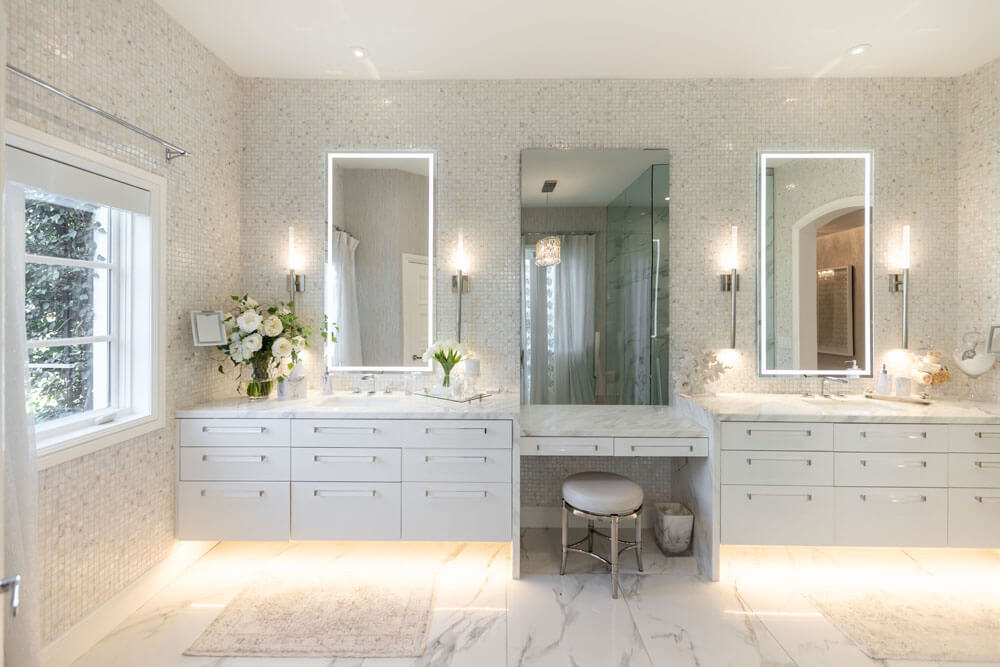
Vanity height is a good example. Standard bathroom vanities sit at about 30 to 32 inches, but comfort-height vanities at 34 to 36 inches reduce the amount of bending required to wash your hands or brush your teeth. For households where seated access matters, a floating (wall-mounted) vanity provides knee clearance underneath while projecting a clean, modern look that has become a design trend in its own right. The open space beneath also makes the room feel larger and simplifies floor cleaning.
Faucet selection matters too. Lever-handle faucets require no gripping or twisting, making them easier for arthritic hands, wet fingers, or anyone carrying something in the other hand. Brands like Kohler, Brizo, and Delta all offer lever designs in premium finishes that look right at home in a luxury setting. Touchless faucets go a step further, eliminating the need for hand contact entirely.
Wider doorways round out the layout conversation. A standard bathroom door opening is typically 24 to 28 inches, but widening to 34 or 36 inches creates a more gracious entry that accommodates wheelchairs, walkers, or simply two people passing at once. Pocket doors are an especially elegant solution because they eliminate the door swing entirely, reclaiming usable floor space while providing wide, unobstructed access.
Flooring and Surface Considerations
The challenge with bathroom flooring has always been balancing safety with beauty. Nobody wants to step out of a luxurious shower onto a surface that looks like a commercial kitchen floor. The good news is that material science has solved this problem in several ways.
Slip resistance in tile is measured by something called the Dynamic Coefficient of Friction, or DCOF. The industry minimum for wet interior floors is 0.42, but for bathrooms designed with accessibility in mind, the professional standard is 0.60 or higher. Daltile’s StepWise technology achieves that higher threshold through a treatment infused into the tile body itself rather than applied as a surface coating, which means the slip resistance will never wear off. It is available across stone-look, wood-look, and fabric-look porcelain collections that look identical to their standard counterparts.
Natural stone is not off the table either. The key is selecting the right finish. Honed marble delivers a soft matte surface with meaningful grip, making it a strong choice for bathroom floors where polished marble would be too slippery. Tumbled travertine offers the highest natural slip resistance of any stone finish, with its slightly textured surface providing inherent traction. The professional technique is to use polished stone on walls and countertops for visual impact while specifying honed or tumbled finishes on the floor for safety. Our upcoming guide to bathroom surface materials will cover tile, stone, and other options in greater detail.
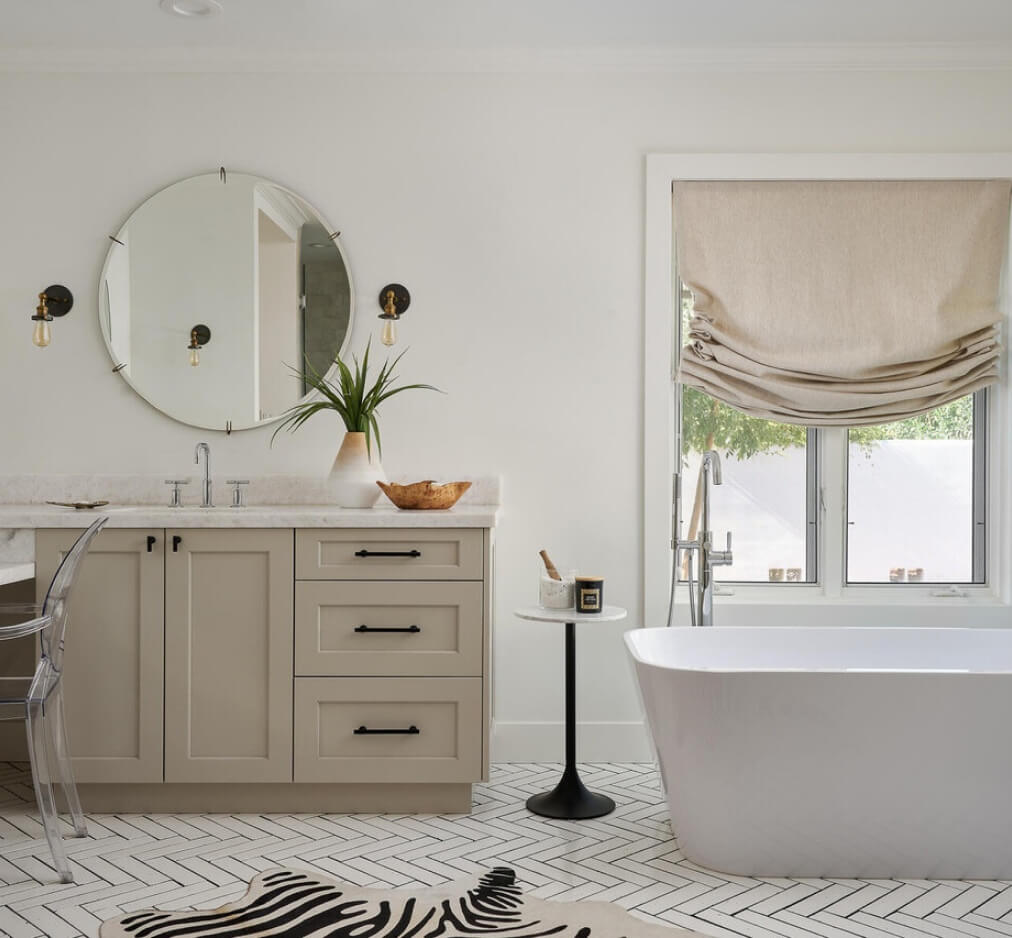
For shower floors specifically, smaller-format mosaics remain the gold standard because the additional grout lines create natural traction. But today’s mosaics include marble penny rounds, hexagonal stone, and handmade ceramic options that look anything but institutional.
Lighting and Controls
Good lighting is one of the easiest ways to improve both the safety and the ambiance of a bathroom, yet it is frequently an afterthought. Aging eyes need significantly more illumination. By age 60, the eye typically requires two to three times the light it did at 20, and by 80 that figure can reach five times as much.
A layered lighting approach addresses this without flooding the room with harsh overhead light. Start with ambient lighting that provides even, shadow-free illumination throughout the space. Add task lighting at the vanity, ideally flanking the mirror on both sides to eliminate facial shadows. Then include accent or nighttime lighting, such as LED strips under a floating vanity, that allows you to navigate the bathroom safely at 3 a.m. without fully waking up.
Controls matter as much as the fixtures themselves. Rocker-style switches are easier to operate than toggle switches because they require only a light press rather than a pinching motion. Smart lighting systems like Lutron Caseta take this further by allowing voice control, motion activation, and programmable scenes. You can set the bathroom lights to come on at a dim, warm glow when motion is detected at night and brighten to full task lighting when you tap a switch in the morning. It is the kind of thoughtful detail that feels luxurious regardless of whether accessibility is your primary motivation.
An experienced interior designer can plan lighting layouts that account for all of these layers while keeping the fixtures themselves beautiful and the controls intuitive.
Designing for the Long Term
The most important takeaway from the shift toward accessible luxury bathrooms is that these features work best when they are planned from the beginning rather than retrofitted after the fact. A curbless shower requires specific subfloor preparation and waterproofing. Grab bar blocking needs to be installed before the drywall goes up. Wider doorways are simple to frame during construction and expensive to add later. Lighting zones and smart controls are easiest to wire before the walls are closed.
This is one of the greatest advantages of a design-build approach. When the same team handles both the design vision and the construction execution, accessibility features get woven into the plan from day one. There is no moment where someone says “we forgot to account for that” because every dimension, every material, and every piece of hardware has been considered together.
If you are thinking about a bathroom remodel in Scottsdale, whether it is a full primary suite renovation or a focused update to make the space work better for your household as it evolves, the conversation is worth starting early. The result can be a room that is safer, more comfortable, and more beautiful than what you had before, all at once.Work with us to start planning a bathroom that looks as good as it functions.